
Wear the outfit you already know works. First-date nerves are not the moment to test a new silhouette, a new heel height or a fabric you have never sat down in for two hours. The people who look most comfortable on a first date are almost always wearing something they have worn before.
That single rule solves most first-date outfit anxiety. What follows is how to build two or three of those known-good outfits, what actually reads well across the most common first-date settings in the US, and the practical checks that stop a good outfit from betraying you halfway through the evening.
Match the outfit to the setting, not to the app photos
Online dating in the US has settled into a short list of first-date formats, and each one has a dress code that regulars understand instinctively.
Coffee. The default first meeting, usually forty-five minutes, usually daytime. The setting is casual and the outfit should be too — overdressing here reads as effort in the wrong direction and makes both people self-conscious.
The walk. A park, a waterfront, a farmers’ market. Comfort is not optional: you will be on your feet the whole time, on uneven ground, possibly in wind. Footwear decides everything.
Drinks at a casual bar. The most forgiving format. Evening lighting, seated, moderate noise. Almost anything works as long as it is not a costume.
Dinner. Now the venue matters. A neighborhood restaurant and a reservation-only place call for different things, and it is entirely reasonable to look up the restaurant before deciding.
The activity date. Bowling, mini golf, a climbing gym, a cooking class. Whatever you wear will be moved in, bent in and photographed in. Treat it as athletic dressing with better styling.
The three-outfit system
Rather than deciding from scratch each time, build three outfits you can reach for without thinking. Most people’s dating calendar is covered by exactly these.
- Build one daytime look: comfortable, structured, no heels.
- Build one evening look: slightly elevated, still sittable.
- Build one activity look: full movement, no adjusting.
- Wear each one for a full day before its first date.
That last point is the one people skip. An outfit that has survived a normal working day has already passed the tests that matter — sitting, standing, stairs, a cold room, a warm room.
Why leggings became the default daytime date outfit
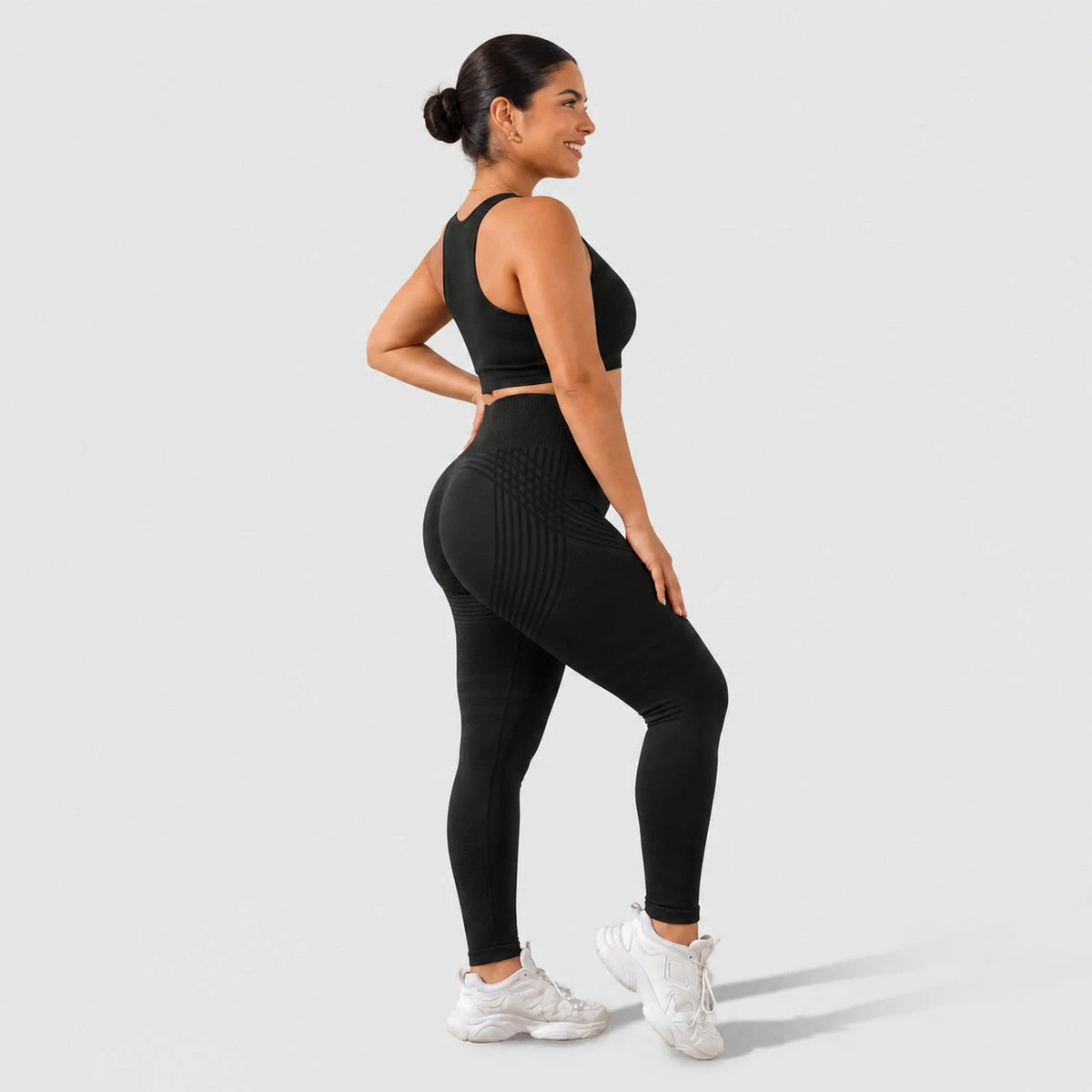
A decade ago leggings were gym clothes. They are now the base layer of American casual dressing, and on coffee dates and walk dates they have quietly become the default. The reason is practical rather than fashionable: they move, they do not need adjusting, and they let the rest of the outfit do the talking.
The catch is that the category is extremely uneven. The difference between a pair that makes you feel put together and a pair you spend the evening tugging at comes down to a few construction details, none of which are visible in a product photo.
Opacity is the first and least negotiable. A knit that looks solid standing up can turn sheer under stretch. The test is to squat in front of a window and look at the back of the thigh — the point of maximum tension. Doing this at home, before the date, costs nothing.
The waistband is the second. A high, multi-layered or ribbed waistband stays where you put it. A single band of elastic rolls down as soon as you sit, and once you have noticed it you will keep noticing it.
The third is the cut through the hip. Many brands draft a pattern on a straight figure and scale it up, which produces the familiar failure: the waistband gaps at the back or the hips pull tight. Brands that draft for hip-to-waist ratio from the start avoid it. As an example of what the specification sheet should tell you, regen leggings publish a 70 % polyamide and 30 % elastane composition, four-way stretch with shape recovery after washing, a ribbed high waistband and a size chart built on waist and hip measurements rather than jeans sizes. Whether or not that particular pair is right for you, those are the four data points worth demanding from any brand before ordering.
Getting the size right when you cannot try them on
Sizing is where most online activewear purchases go wrong, and the fix takes three minutes with a tape measure.
- Measure your natural waist at its narrowest, snug but not tight.
- Measure your hips at the fullest point, tape level to the floor.
- Take both measurements over underwear, never over jeans.
- Choose the size your hips fall into when the two disagree.
The hip rule holds across serious brands: a well-built waistband adapts downward, whereas hips that are too tight never adapt at all. If you are between sizes, the larger one favors comfort and the smaller one favors a firmer shaping effect.
Footwear makes or breaks the walk date
Clean white sneakers have become the American default for daytime dates for a reason: they read as deliberate rather than lazy, and they let you walk two miles without thinking about it. Ankle boots work for the same reasons in colder months.
Heels on a first date are a specific choice, not a neutral one. They are fine for a seated dinner. They are a genuine problem on a walk, on gravel, on cobblestones, or at any venue you have not seen before. If you do not know the terrain, do not commit to the heel.
Layers solve American indoor climate control
US restaurants and bars are aggressively air-conditioned in summer and overheated in winter. A third layer you can add or remove — an oversized blazer, a cropped jacket, a heavy cardigan — is the difference between staying present in a conversation and spending it slightly uncomfortable.
The layer also does styling work. The same leggings and top read as errands with a hoodie and as a deliberate outfit with a structured blazer. That flexibility is why the combination has become a staple.
Five things to check before you leave
Sit down in front of a mirror. Most outfits look fine standing and reveal their problems seated — waistbands that gap, hems that ride, necklines that shift.
Walk up a flight of stairs. This finds anything that rides, slips or chafes, and it takes twenty seconds.
Check the outfit under a different light. Bathroom lighting, daylight and restaurant lighting are three different environments, and thin fabrics behave differently in each.
Confirm you have pockets, or a bag you are happy to carry all evening. A bag you have to keep track of becomes a distraction.
Take one photo of yourself in it. Not for anyone else — a photo shows you what the outfit reads as, which is not always what the mirror suggests.
What the outfit is actually doing
No outfit makes a date go well. What it can do is remove one variable, so your attention is on the conversation instead of on your waistband. That is the entire job, and it is best done by clothes you have already proven to yourself.
Which is why the three-outfit system beats shopping before every date. Once the daytime look, the evening look and the activity look are settled and tested, the decision disappears — and the version of you that shows up is the relaxed one.